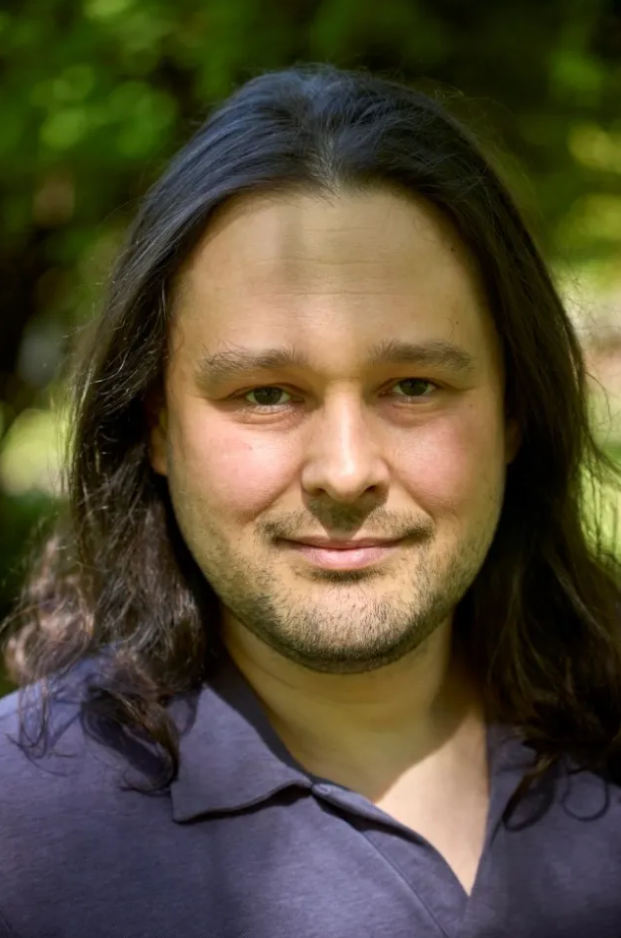
🌟 We are pleased to introduce our speaker, Dr Michał Drahus from the Astronomical Observatory at the Jagiellonian University! 🌟
Dr Michał Drahus is an Assistant Professor in the Department of Stellar and Extragalactic Astronomy, where he studies comets and other small bodies of the Solar System using modern observational techniques across all wavelengths. ☄️ 🌔
He received his M.Sc. degree from the Jagiellonian University and earned his Ph.D. in Astronomy and Astrophysics in collaboration with the Max Planck Institute for Solar System Research and the University of Göttingen.🧑🚀 Following his doctorate, he conducted research in the USA at the University of California, Los Angeles, and as a Jansky Fellow at the California Institute of Technology.
He is the Principal Investigator of the Polish space mission HYADES 🚀 (HYdrogen And DEuterium Survey), funded by the European Research Council. The project aims to design, build, and launch a microsatellite that will investigate the origin of water on Earth. Once in orbit, the satellite will perform ultra-precise measurements of hydrogen and deuterium around comets and asteroids, searching for traces of water sources in the Solar System — with accuracy far exceeding that of the Hubble Space Telescope. 🔭
He will present this groundbreaking project during his talk at SeMPowisko — we can’t wait to hear it! 👾
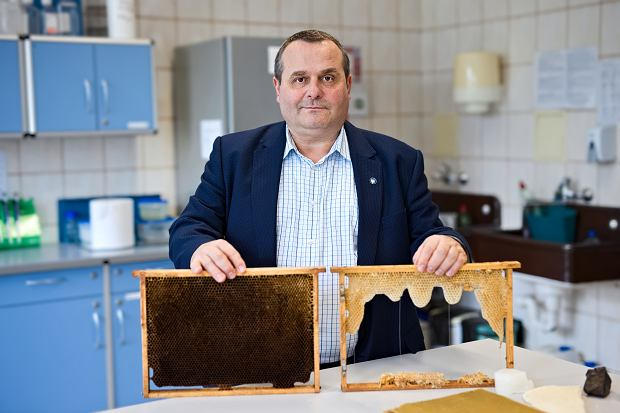
✨ It is our great pleasure to introduce our next speaker – Professor Mariusz Gagoś, Head of the Department of Cell Biology at Maria Curie-Skłodowska University in Lublin. ✨
Professor Gagoś graduated in physics from MCSU and subsequently worked at the Nuclear Medicine Laboratory of the Regional Hospital, as well as serving as an assistant at the Department of Physics of the University of Life Sciences in Lublin. ⚛️ He completed his PhD at the Institute of Physics of MCSU and his habilitation at the Institute of Physics of Nicolaus Copernicus University in Toruń. Since 2011, he has been affiliated with the Faculty of Biology and Biotechnology at MCSU, where he was awarded the title of Professor of Biological Sciences in 2014. 🧫
In his research, Prof. Gagoś applies spectroscopic methods to analyze the molecular organization of biologically active compounds in model biological systems. He also investigates substances with anticancer and antifungal properties. ⚗️ Moreover, he is the author of numerous patented and award-winning inventions. 🪛
As part of pursuing his passion, he is also engaged in beekeeping. 🐝
🏵 We encourage you to explore Prof. Gagoś’s research in more detail here.
✨We are honoured to present our guest, Bartłomiej Rzonca, DSc, Eng., Professor at the Jagiellonian University.✨
Professor Rzonca is a hydrologist and hydrogeologist, professor in the Department of Hydrology at the Institute of Geography and Spatial Management at the Jagiellonian University. He earned a Master of Science in Environmental Engineering and Hydrogeology from the AGH University of Science and Technology in Kraków, where he also earned a PhD in Hydrogeology in 2001. He worked as a Fulbright Scholar at the University of Texas at El Paso and the University of Wrocław. He has been associated with Jagiellonian University since 2004.
Professor Rzonca conducts hydrological and hydrogeological research both in Poland, particularly in Bieszczady, and abroad, e.g. Algeria. His research includes water circulation conditions in rock formations, particularly in mountain areas, which provide evidence of groundwater resources, water circulation in urban areas, and the chemical composition of water and its shaping processes.🌍💧
🌟 Z przyjemnością przedstawiamy Państwu naszego speakera, dra Michała Drahusa z Obserwatorium Astronomicznego UJ! 🌟
Dr Michał Drahus jest adiunktem w Zakładzie Astronomii Gwiazdowej i Pozagalaktycznej, gdzie bada komety i inne małe ciała Układu Słonecznego, wykorzystując nowoczesne techniki obserwacyjne w pełnym zakresie długości fal. ☄️ 🌘
Studia magisterskie ukończył na Uniwersytecie Jagiellońskim, zaś doktorat z astronomii i astrofizyki uzyskał we współpracy z Max Planck Institute for Solar System Research oraz Uniwersytetem w Getyndze. 🧑🚀 Po obronie pracował naukowo w USA — na University of California, Los Angeles oraz jako Jansky Fellow w California Institute of Technology.
Jest liderem polskiej misji kosmicznej HYADES 🚀 (HYdrogen And DEuterium Survey), finansowanej przez European Research Council. Celem przedsięwzięcia jest zaprojektowanie, zbudowanie i wysłanie na orbitę mikrosatelity, który zbada pochodzenie wody na Ziemi. Po starcie satelita będzie wykonywał niezwykle precyzyjne pomiary wodoru i deuteru wokół komet i planetoid, szukając śladów źródeł wody w Układzie Słonecznym — z dokładnością znacznie przewyższającą możliwości Kosmicznego Teleskopu Hubble’a. 🔭
To właśnie ten projekt przybliży w swoim wystąpieniu na SeMPowisku — nie możemy się doczekać! 👾
✨ Z ogromną przyjemnością przedstawiamy Państwu naszego kolejnego mówcę – profesora Mariusza Gagosia, Kierownika Katedry Biologii Komórki na UMCS w Lublinie. ✨
Profesor Gagoś ukończył studia z fizyki na UMCS, a następnie pracował w Pracowni Medycyny Nuklearnej Szpitala Wojewódzkiego oraz jako asystent w Katedrze Fizyki UP w Lublinie. ⚛️ Doktorat ukończył w IF UMCS, zaś habilitację w IF UMK w Toruniu. Od 2011 r. jest związany z Wydziałem Biologii i Biotechnologii UMCS, gdzie w 2014 r. otrzymał tytuł profesora nauk biologicznych. 🧫
W swoich badaniach prof. Gagoś wykorzystuje metody spektroskopowe do analizy organizacji molekularnej związków biologicznie czynnych w modelowych układach biologicznych. Bada również substancje o właściwościach przeciwnowotworowych i przeciwgrzybiczych. ⚗️ Ponadto jest twórcą wielu opatentowanych i nagrodzonych wynalazków. 🪛
W ramach realizowania swojej pasji zajmuje się hodowlą pszczół. 🐝
🏵 Zachęcamy do zapoznania się bliżej z badaniami prof. Gagosia tutaj.
✨Mamy zaszczyt zaprezentować naszego gościa, dr hab. inż. Bartłomieja Rzoncę, prof. UJ✨
Profesor Rzonca jest hydrologiem i hydrogeologiem, profesorem w Zakładzie Hydrologii Instytutu Geografii i Gospodarki Przestrzennej Uniwersytetu Jagiellońskiego. Uzyskał tytuł magistra inżyniera w dziedzinie inżynierii środowiska oraz hydrogeologii na Akademii Górniczo - Hutniczej w Krakowie, gdzie w 2001 roku uzyskał także doktorat z hydrogeologii. Pracował jako stypendysta Programu Fulbrighta na University of Texas w El Paso oraz na Uniwersytecie Wrocławskim. Od 2004 roku związany z Uniwersytetem Jagiellońskim.
Profesor Rzonca prowadzi badania hydrologiczne i hydrogeologiczne zarówno w Polsce, w szczególności w Bieszczadach, jak i za granicą, m.in. w Algierii. Jego badania obejmują warunki obiegu wody w ośrodkach skalnych, w szczególności na obszarach górskich, świadczące o stanie zasobów wód podziemnych, obieg wody w obszarach miejskich, skład chemiczny wód i procesy jego kształtowania.🌍💧

 Official page of SMP

 kmpsuj@uj.edu.pl

 Discord Server

 KMPSUJ Fanpage

 SeMPowisko Instagram

 LinkedIn

 GitHub